A city-by-city breakdown that goes beyond rent and groceries.
Ask ten Indian immigrants what the ‘good life’ means and you’ll get ten different answers. For one person it’s a 3,000-square-foot apartment in Hyderabad with a cook, a driver, and parents ten minutes away. For another, it’s a rent-controlled one-bedroom in Philadelphia within walking distance of a world-class art museum and a job that doesn’t require explaining yourself to anyone. Neither answer is wrong. But the financial math behind each — and the trade-offs involved — is more complicated than a simple salary comparison.
This piece breaks down what $100,000 a year actually buys across six cities: Mumbai and Delhi (India’s Tier 1), Pune and Hyderabad (Tier 2), and Philadelphia and Milwaukee on the US side. All figures use 2024–25 data and an exchange rate of ₹94/$1.
One number you’ll encounter throughout: purchasing power parity, or PPP. The World Bank estimates that $1 spent in India buys roughly what $3–4 buys in the US — because local goods, services, and labor are priced in rupees against a much lower wage baseline. PPP doesn’t affect how much you earn, but it determines how far that money actually goes. We’ll apply it as a reality check at each tier comparison.
Why We’re Not Using Standard Cost-of-Living Indices
Mercer’s Quality of Living rankings are designed for multinational HR departments deciding expat relocation packages. Numbeo is useful but crowd-sourced, skewed toward upscale neighborhoods, and captures almost none of the things that genuinely move the needle for Indian immigrants: domestic help, joint family proximity, social density, or the spiritual relief of having someone else cook dinner every night. So we built our own framework.
Our Seven Quality-of-Life Parameters
1. Financial breathing room: What percentage of take-home pay remains after essentials.
2. Housing space per dollar: How much actual living space your rent buys.
3. Time reclaimed: Commute length plus domestic burden — hours per week lost to logistics.
4. Social and family fabric: Proximity to extended family, community density, ease of connection.
5. Cultural access: Arts, dining, sport, nightlife — the infrastructure of a stimulating life.
6. Healthcare: Quality of private care, accessibility, and out-of-pocket cost.
7. Environment: Air quality, green space, walkability, and personal safety.
Tier 1 vs. Tier 1: Mumbai/Delhi vs. San Francisco/New York
📍 This section could be its own article: Mumbai vs. NYC: A Fair Fight? (full deep-dive)
Let’s start at the top. Mumbai and Delhi are India’s most expensive cities. San Francisco and New York are America’s. In theory, comparing them is apples to apples. In practice, the experience of living in each is so different that the comparison almost breaks down.
| Mumbai | Delhi/Gurgaon | San Francisco | New York City | |
|---|---|---|---|---|
| 2BHK monthly rent | ₹75,000 (~$798) | ₹50,000 (~$532) | $3,500 | $3,800 |
| Domestic help/mo | ₹12,000 (~$128) | ₹10,000 (~$106) | N/A | N/A |
| Commute (daily avg) | 90–120 min | 75–90 min | 60–75 min | 60–90 min |
| Air quality (AQI avg) | 100–150 | 150–300+ | 30–50 | 40–60 |
| Restaurant meal (mid) | ₹1,500 (~$15) | ₹1,200 (~$12) | $25–35 | $30–40 |
| Monthly essentials | ~₹1,30,000 ($1,383) | ~₹1,00,000 ($1,064) | ~$5,200 | ~$5,800 |
On paper, Mumbai at $1,383/month in essentials looks spectacular compared to SF at $5,200. But there’s a catch: the salary you’d earn doing equivalent tech work in Mumbai is roughly ₹30–50 lakh ($32–53K) — not $100K. The purchasing power advantage is real, but it comes bundled with a significant income ceiling, especially mid-career.
Apply the PPP lens: Mumbai’s $1,383 in monthly essentials has the real purchasing power of roughly $4,100–5,500 in US terms. That’s actually competitive with SF’s $5,200 — which means the lifestyle gap between the two cities is smaller than the raw numbers suggest. What keeps Mumbai from ‘winning’ isn’t cost. It’s the salary ceiling and the commute.
Delhi adds another variable: air quality so bad it’s a genuine health risk. The AQI in Delhi regularly exceeds 300 in winter — the kind of number that keeps kids home from school and sends expats reaching for air purifiers. Mumbai’s air is better, but its traffic is legendary. A 10-kilometer commute crossing Bandra during rush hour can take 90 minutes. These are hours you never get back.
The Tier 1 India advantage: domestic help, incredible food, and social richness. The Tier 1 India tax: your lungs, your commute time, and a lower salary ceiling.
Tier 2 vs. Tier 2: Pune vs. Milwaukee, Hyderabad vs. Philadelphia
📍 This section could be its own article: Pune vs. Milwaukee: The Underrated Quality-of-Life Showdown • Hyderabad vs. Philadelphia: Two Cities on the Rise
This is where the comparison gets genuinely interesting — and where the standard indices fail you most completely. Pune and Hyderabad are booming Indian tech hubs with rapidly improving infrastructure. Milwaukee and Philadelphia are mid-tier American cities that offer a dramatically better quality of life than SF or NYC on the same salary, but often get overlooked.
Pune vs. Milwaukee
| Pune (Baner/Kalyani Nagar) | Milwaukee, WI | |
|---|---|---|
| 2BHK monthly rent | ₹35,000 (~$372) | $1,300 |
| Monthly take-home ($100K) | ~₹5,64,000 (~$6,000) | ~$6,400 |
| Total monthly essentials | ~₹75,000 (~$798) | ~$2,800 |
| Discretionary left/mo | ~$5,200 | ~$3,600 |
| Domestic help | ₹8,000/mo (~$85) | N/A (~$1,800+ for cleaner 2×/wk) |
| Commute (daily avg) | 45–75 min | 25–35 min |
| Air quality (AQI avg) | 80–120 | 30–50 |
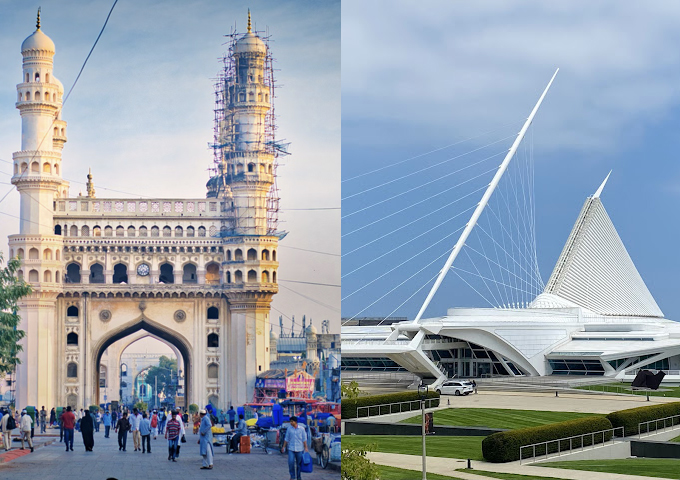
| Notable cultural asset | Festivals, live music scene | Summerfest (world’s largest music festival), Milwaukee Art Museum, Full Symphony Orchestra |
Milwaukee is the dark horse of mid-tier US cities. The housing is genuinely cheap — you can rent a 2-bedroom with parking for $1,300, and buy a house for under $250,000 in a decent neighborhood. The winters are brutal (we’re not pretending otherwise), but Lake Michigan is a natural amenity that most cities would kill for, and Summerfest — the world’s largest outdoor music festival — runs for eleven days every summer. On $100K, you live well.
PPP check: Pune’s ~$798/month in essentials carries the real purchasing power of roughly $2,400–3,200 in US terms. Milwaukee at $2,800 is actually in the same ballpark on a PPP-adjusted basis — but Pune’s discretionary income is still ~45% higher, and that gap compounds fast when you’re saving, investing, or sending money home.
Pune, meanwhile, is arguably India’s most livable large city right now. The climate is mild year-round, the IT corridor along Baner–Balewadi–Hinjewadi is modern and functional, and the food scene — from Vaishali’s misal pav to the wine bars in Koregaon Park — has quietly become one of India’s best. Discretionary income at ~$5,200/month is extraordinary by any standard. The trade-off is traffic that’s rapidly worsening and an air quality index that occasionally spikes.
Hyderabad vs. Philadelphia
| Hyderabad (HITEC City/Gachibowli) | Philadelphia, PA | |
|---|---|---|
| 2BHK monthly rent | ₹42,000 (~$447) | $2,000 |
| Monthly take-home ($100K) | ~₹5,64,000 (~$6,000) | ~$6,200 |
| Total monthly essentials | ~₹80,000 (~$851) | ~$3,600 |
| Discretionary left/mo | ~$5,149 | ~$2,600 |
| Domestic help | ₹9,000/mo (~$96) | N/A |
| Commute (daily avg) | 45–60 min | 30–45 min (transit options) |
| Air quality (AQI avg) | 70–110 | 45–65 |
| Notable cultural asset | Charminar, Golconda, biryani culture | Philadelphia Museum of Art, world-class dining, Ivy-adjacent universities |
Hyderabad has had a remarkable decade. It’s now home to major campuses for Google, Microsoft, Amazon, and virtually every Indian IT giant. The infrastructure around HITEC City is genuinely modern, the weather is more forgiving than Delhi or Mumbai, and the city’s cultural identity — biryani, Nizami architecture, a strong Telugu arts tradition — gives it a richness that newer tech hubs lack. On our framework, Hyderabad scores remarkably well across most parameters except cultural access compared to a Tier 1 US city.
Philadelphia punches above its weight. It has genuine world-class museums (the Philadelphia Museum of Art alone could anchor a city’s cultural identity), a food scene that rivals NYC at half the price, walkable neighborhoods like Rittenhouse Square and Fishtown, and reasonable public transit. At $100K, you’re not just surviving — you’re building savings, eating well, and probably watching live sport regularly. It’s the closest an American city gets to the Hyderabad value proposition.
The Tier 2 surprise: Pune and Hyderabad now offer infrastructure and cultural life competitive with mid-tier US cities — at a fraction of the cost and with domestic help. Philadelphia and Milwaukee offer the best US quality-of-life per dollar, but without the financial breathing room of their Indian counterparts.
The Cross-Tier Arbitrage: Tier 2 India on a Tier 1 US Salary
📍 This section could be its own article: The Remote Worker Arbitrage: How Indian Tech Professionals Are Quietly Building Wealth
Here’s the scenario that is genuinely changing lives: an Indian tech professional earning $100K in USD — whether through remote work for a US company, freelancing, or a startup equity payout — who lives in Pune or Hyderabad. This person earns in dollars, spends in rupees, and operates in a world where their purchasing power is effectively equivalent to someone making $350,000–400,000 in San Francisco.
That figure isn’t an exaggeration — it’s PPP math. A $6,000 monthly take-home spent in Pune carries a real purchasing power of roughly $18,000–24,000 in US terms (applying the World Bank’s 3–4x PPP multiplier for India). Annualized, that’s $216,000–288,000 in equivalent US purchasing power — on a $100K salary.
Monthly essentials run ~$800–900. Monthly take-home is ~$6,000. That leaves over $5,000 a month in discretionary income — in a city where an excellent restaurant dinner costs $8, a domestic cook costs $85 a month, and a spacious apartment runs $400. This isn’t a hypothetical lifestyle upgrade. It’s a wealth-building machine, particularly for anyone with family obligations in India (medical costs, parents’ support, property investments) that drain US-based NRIs of the one thing they have plenty of: dollars.
The Quality-of-Life Scorecard
Rated 1–5 across our seven parameters. Higher is better.
| Parameter | Mumbai | Delhi | SF/NYC | Pune | Hyd. | Philly | Milw. |
|---|---|---|---|---|---|---|---|
| Financial breathing room | 2 | 2 | 2 | 5 | 5 | 3 | 4 |
| Housing space per $ | 3 | 3 | 1 | 5 | 5 | 3 | 5 |
| Time reclaimed | 1 | 2 | 2 | 3 | 3 | 4 | 5 |
| Social/family fabric | 5 | 5 | 2 | 4 | 4 | 3 | 2 |
| Cultural access | 5 | 4 | 5 | 3 | 4 | 5 | 3 |
| Healthcare quality | 4 | 3 | 4 | 3 | 4 | 5 | 4 |
| Environment / air | 2 | 1 | 5 | 3 | 3 | 4 | 5 |
| TOTAL (out of 35) | 22 | 20 | 21 | 26 | 28 | 27 | 28 |
Hyderabad, Pune, Philadelphia, and Milwaukee cluster together at the top — for entirely different reasons. Hyderabad and Pune win on financial breathing room, family proximity, and housing. Philly and Milwaukee win on environment, cultural access, and time. Mumbai scores highest on culture and family but is dragged down by commute and air quality. Delhi’s air is a genuine quality-of-life crisis.
Maids vs. Museums: Whose Definition of ‘Good Life’ Wins?
The maid-and-driver lifestyle that $100K buys in Pune isn’t just a financial convenience — it’s a fundamental reordering of daily life. In the US, managing a household is a second unpaid job shared between partners. Groceries, cooking, cleaning, laundry, and childcare consume 15–20 hours a week for the average dual-income American couple. In Pune or Hyderabad, those hours are handed back to you. People who’ve lived both lives almost universally describe this as the most underrated quality-of-life variable in the entire comparison.
But here’s the counter-argument, and it’s a real one: the museum, the theater, the great public library, affordable top-notch K–12 education, the park that’s actually maintained — these aren’t luxuries. They’re the infrastructure of a stimulating intellectual and civic life. Philadelphia has the Barnes Foundation. Milwaukee has a waterfront that doesn’t require a car to access. San Francisco has, well, San Francisco. The US city experience, at its best, offers a kind of anonymous civic richness — world-class institutions open to everyone — that Indian cities are still building toward.
Second-generation Indian-Americans who grew up in the US often feel this acutely when considering a move to India. The purchasing power is extraordinary, the family is there, the food is better. But the public infrastructure — sidewalks, libraries, parks, reliable utilities — is still catching up. That gap is closing, particularly in Pune and Hyderabad, but it hasn’t closed yet.
Bottom Line: Who Should Live Where
| If you are… | Consider… |
|---|---|
| A mid-career tech professional, single, career-focused | SF/NYC or Philadelphia — the salary ceiling and professional network matter more than comfort right now |
| A dual-income couple with kids, prioritizing family and financial freedom | Pune or Hyderabad — the discretionary income and domestic support change the calculus entirely |
| An NRI earning in USD remotely | Tier 2 India, no contest — it’s the closest thing to a financial superpower available to any individual today |
| Approaching retirement or semi-retirement with US savings | Pune or Hyderabad — your dollar-denominated savings generate a genuinely wealthy life in INR terms |
| A second-gen Indian-American seeking cultural connection without sacrificing US civic life | Philadelphia or Milwaukee — Tier 2 US cities offer the best balance of affordability, culture, and quality of life |
The salary number on your offer letter tells you almost nothing on its own. What matters is the ratio of that number to your essentials, the hours it buys back in your day, and whether the city around you makes life feel worth living. Different people will answer that last question differently — and both answers can be right.
Data sources: IRS 2024 tax brackets; India Income Tax Act (new regime, FY 2024–25); Numbeo Cost of Living Index (2025); RBI exchange rate (₹94/$1); World Bank PPP data; AQI data via IQAir city averages 2024; Milwaukee, Philadelphia city planning data.